The latest global food price data shows a stable headline index but growing pressure beneath it. United Nations agencies, the World Bank and U.S. officials are tracking higher fertilizer, energy and category-specific food costs that could affect markets through year-end. Readers will learn which risks matter most and how they may reach American grocery bills.
Key Takeaways
- The FAO Food Price Index averaged 130.3 points in June 2026, down 0.3 percent from May but 2.2 percent above June 2025.
- The World Bank projects its global food commodity index to rise about 2.5 percent in 2026, with risks tilted upward.
- USDA forecasts U.S. food prices to increase 3.1 percent in 2026 and grocery prices to rise 2.7 percent.
- About 2.69 billion people were unable to afford a healthy diet in 2025, according to the latest UN report.
Global food price pressure has not developed into a broad worldwide surge, but the latest data shows why year-end conditions remain under scrutiny. The Food and Agriculture Organization of the United Nations reported that its benchmark index edged lower in June as declines in cereals, sugar and dairy outweighed increases in vegetable oils and meat.
The index averaged 130.3 points, down 0.3 percent from May and 2.2 percent above its year-earlier level. The monthly decline did not erase the annual increase.
“Individual commodity markets continue to respond differently to evolving factors,” said Boubaker Ben-Belhassen, director of FAO’s Markets and Trade division.
Cereal prices fell 3.5 percent in June, supported by stronger wheat and maize supply prospects. Vegetable oil prices rose 3.8 percent, while meat increased 0.5 percent and reached a record high. Rice gained 3.2 percent as demand strengthened and production, transport and marketing costs remained elevated.
FAO expects global cereal production to reach 2.983 billion metric tons in 2026, the second-highest total on record but 1.9 percent below last year. The harvest forecast provides a supply buffer, although El Niño could add uncertainty in producing regions.
Fertilizer and Energy Raise Year-End Exposure
The strongest pressure may come from costs outside the farm gate. The World Bank expects fertilizer prices to increase 31 percent in 2026 and places its global food commodity index about 2.5 percent higher for the year.
That baseline does not indicate a repeat of 2022 conditions. Risks could rise, however, if high energy costs, fertilizer constraints, adverse weather and transport delays overlap.
Energy affects irrigation, fertilizer manufacturing, refrigeration, processing and freight. Higher food distribution costs can move through several stages of the supply chain before reaching stores, with timing shaped by contracts, inventories and processing requirements.
The UN’s latest food affordability report estimated that a healthy diet cost an average of 4.28 purchasing-power-parity dollars per person per day in 2025, up from 3.44 in 2021. About 2.69 billion people, or 32.7 percent of the global population, could not afford that diet.
U.S. Grocery Prices Show Uneven Pressure

Photo Credit: Unsplash.com
Global commodity movements do not pass directly into U.S. grocery prices. Domestic labor, processing, packaging, transportation and crop conditions also influence what consumers pay. USDA notes that consumer prices can lag movements at the farm and wholesale levels because food passes through multiple processing stages.
The Bureau of Labor Statistics reported that food-at-home prices increased 2.7 percent during the 12 months ending in June. Fruits and vegetables rose 5.3 percent, while meats, poultry, fish and eggs increased 2.6 percent.
USDA’s July outlook forecasts all food prices to rise 3.1 percent in 2026. Grocery prices are projected to increase 2.7 percent, while restaurant prices could rise 3.5 percent. The estimates point to continued pressure rather than a uniform shock.
Category forecasts show a wider range. USDA expects beef and veal prices to increase 10.7 percent, fresh vegetables to rise 6.8 percent and sugar and sweets to gain 7.2 percent. Egg prices, by contrast, are projected to fall 30.7 percent as production recovers.
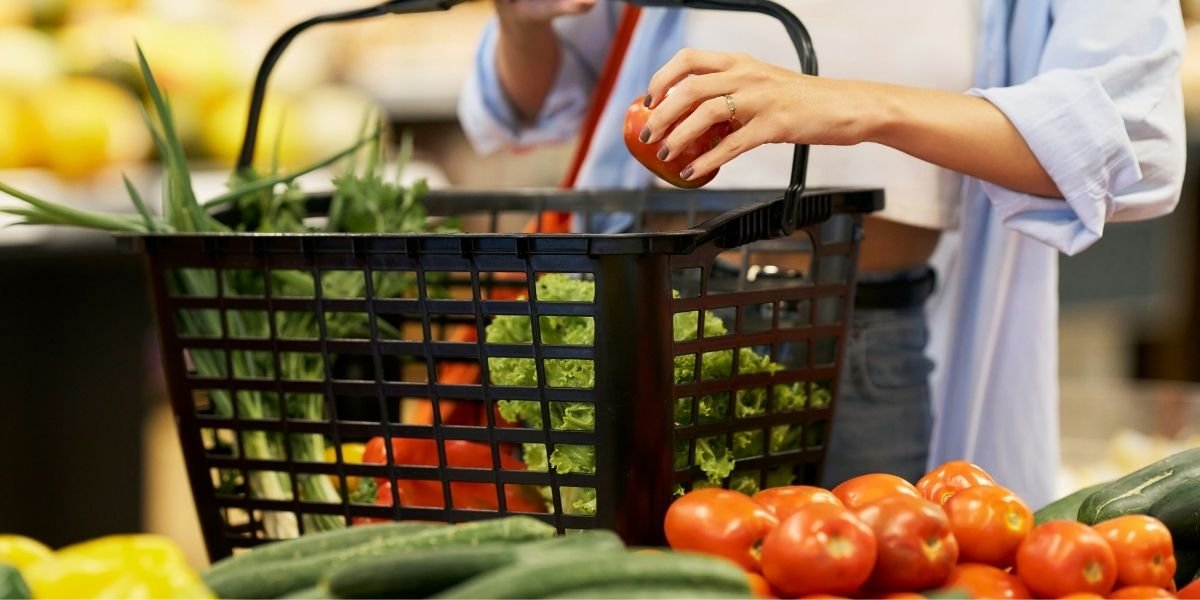
Fresh vegetable prices were 9.9 percent higher in June than a year earlier. Lettuce was up 32.1 percent and tomatoes were 19.5 percent higher, while potatoes rose only 1.4 percent. Those differences explain why household experience may diverge from average grocery inflation and why grocery spending strategies can matter when frequently purchased items rise faster.
The global food price outlook through December remains a risk assessment, not a confirmed forecast of a sharp increase. FAO’s index, USDA forecasts and U.S. inflation reports will show whether input costs spread more broadly. The clearest signal would be sustained increases across several categories.
Frequently Asked Questions
Is a Sharp Global Food Price Increase Guaranteed by Year-End?
No. The global food price data shows upward risks, but FAO’s overall index declined slightly in June. The result will depend partly on weather, energy, fertilizer, transport and crop conditions.
Why Can Global Commodity Prices Differ From U.S. Grocery Prices?
Commodity prices represent only part of the retail cost. Processing, packaging, labor, transportation and store conditions can delay, reduce or amplify the movement consumers eventually see.
Which U.S. Food Categories Face the Largest Projected Increases?
USDA places beef and veal, sugar and sweets, and fresh vegetables among the categories with larger expected increases in 2026. It also projects a substantial annual decline in egg prices.
What Does the FAO Food Price Index Measure?
The index tracks monthly changes in international prices for a basket of widely traded food commodities. It is a global benchmark, not a measure of exact prices at U.S. grocery stores.