By: Azhar Hussaini
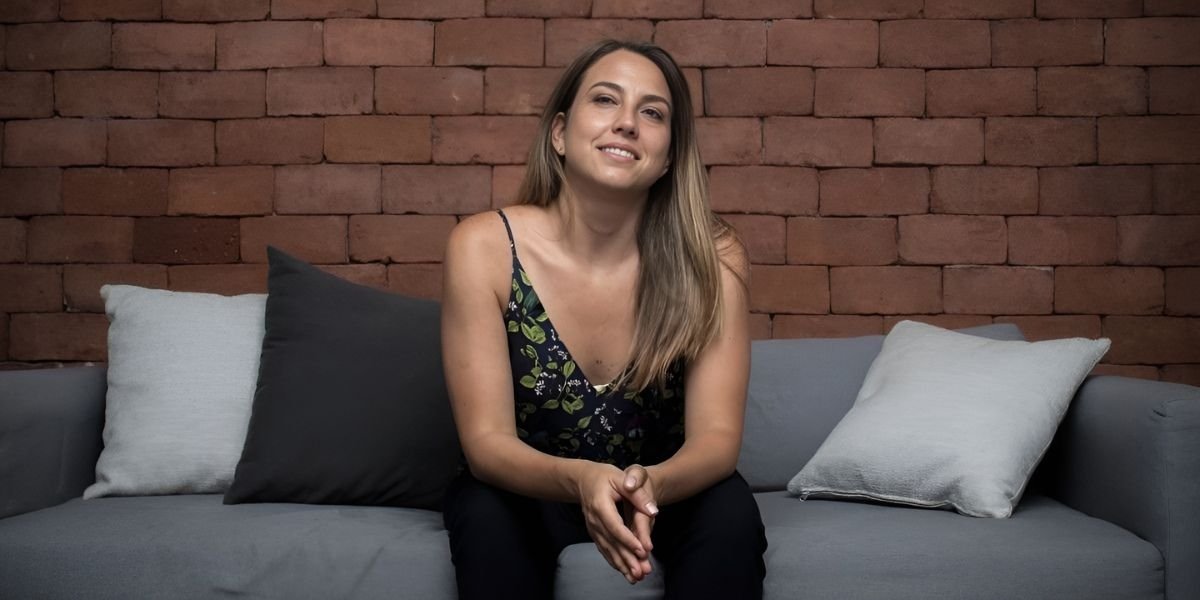
Some places leave such a profound mark on you that no matter where you go or what you create, that influence remains. It shows up in your choices, your perspective, and your work, even in the smallest details. That’s the case for Melissa Elbers, the founder of Nimbus Design Shop. She is a designer whose work in both architecture and ceramics is shaped by her upbringing in Peru. Raised in a country with a rich mix of ancient and modern influences, she carries that blend into everything she builds or sculpts. Whether designing a structure or handcrafting a ceramic lamp, there is a distinct thread that ties it all together—her heritage. Her professional journey began early. Melissa studied architecture in Lima and started working in the field while still in school. After moving to the U.S., she discovered new creative outlets and became drawn to ceramics. What began as a side passion gradually evolved into a second career. Today, she runs both an architectural design practice and a ceramics studio, blending structure and soul in her work.
Where She Comes From Shapes Everything
Melissa doesn’t treat her heritage as a brand—it’s simply how she sees and engages with the world.
Raised in Peru, she grew up surrounded by a mix of history: pre-Columbian traditions, colonial architecture, and the pulse of modern Latin American design. These cultural layers naturally shaped her creative instincts, not through theoretical knowledge but through daily life. In her architectural work, she draws deeply from the wisdom of ancient Andean civilizations. The Inca’s integration of stone structures with their natural surroundings, like Machu Picchu, serves as a constant reminder of the significance of contextual design. Instead of imposing buildings onto a site, she strives to create spaces that feel as though they belong there. This often involves using materials like adobe, stone, and wood, which are locally sourced and selected based on the environment in which the structure resides.
Her ceramic work offers a more intimate expression of that same heritage. Rather than being overtly decorative, her pieces focus on texture, form, and feel. There’s a subtle strength in them. You can see the influence of traditional Peruvian craftsmanship, but reimagined through her modern perspective. Each object feels both familiar and fresh, grounded in history, yet distinctly her own.
As Melissa says, “As a Peruvian-born and raised architect, my heritage deeply shapes both my aesthetic sensibilities and my design philosophy in architecture and ceramics.”
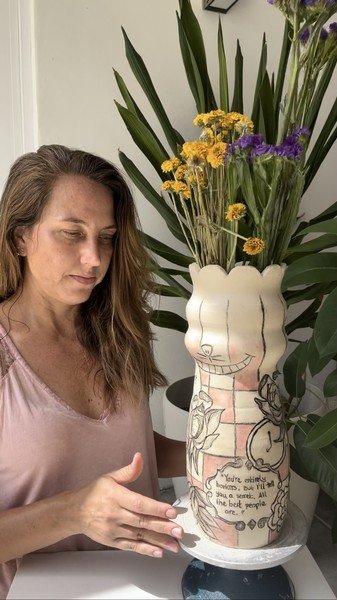
Photo Courtesy: Melissa Elbers
Bridging Two Worlds
One of the most interesting aspects of Melissa’s career is how she balances two seemingly different disciplines. Architecture requires large-scale thinking, planning, structure, and deadlines. Ceramics is slower and more intuitive, often shaped by touch and feel. Instead of keeping these worlds separate, she uses them to inform one another. Her architectural eye provides her ceramics with a sense of proportion and presence. Her hands-on ceramic practice, in turn, reminds her to stay connected to the materials and to keep the human experience central in her designs. This interplay keeps her work grounded and prevents her from designing simply for the sake of design. Whether it’s a building or a lamp, her goal remains the same: to create something that feels as though it belongs.
Why It Matters
In an industry that often focuses on trends or highly polished aesthetics, Melissa’s approach stands out for its quiet clarity. She doesn’t design to impress; she designs to connect. Her work carries a sense of calm and care. Nothing seems forced. That’s what makes it memorable. Her projects, whether grand or modest, leave space for people to feel something—perhaps a sense of place, a sense of home, or even a sense of history. For Melissa, good design is not simply about beauty or functionality. It’s about intention. It’s about telling a story, even if it’s told quietly. More than anything, it’s about honoring where you come from while creating something new. In this way, her work feels less like a career and more like a conversation between the past and the present, between land and hand, a conversation that leaves a subtle mark.